11.33 Gallon Walstad – Initial Setup Process

I originally intended this 11.33 to be an Iwagumi inspired tank, but the rocks I had for the tank weren’t right for Iwagumi. Iwagumi uses rocks/stones as the basis of the structure, sort of like a skeleton. The rock I wanted to use broke into rather roundish pieces, making it hard to have any jutting pieces. It also made it hard to find ways to position the rocks near each other. So I had to pick between scrapping the beautiful white marble I’d found in my backyard or try to find a way to use it effectively. I’m not entirely sold on how the tank has come out; I expect there to be some major changes or re-scapes in the future.
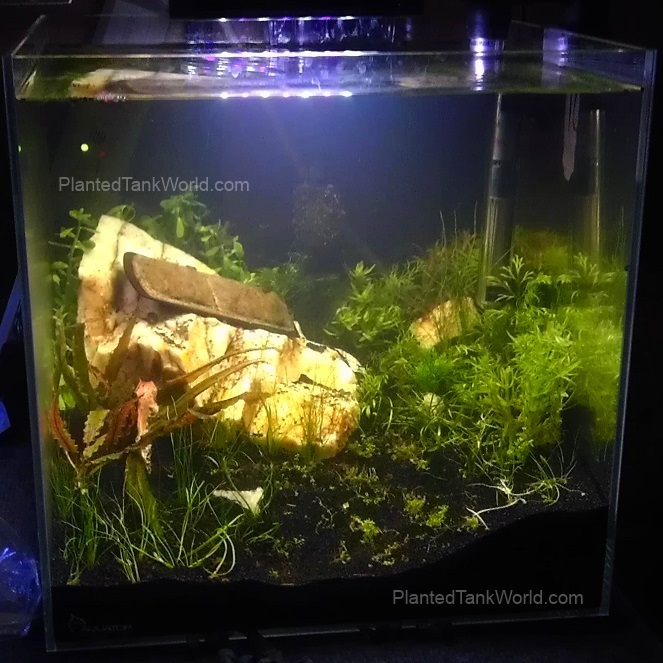
11.3 Gallon - Day 1 - That's the filter insert on the large rock.

11.3 Gallon – Day 1 – That’s the filter insert on the large rock.

Initial Tank Setup Process

  1. Gear: Placing the filter intake and outflow along with the heater can affect the balance of a tank. I usually get all of the “gear” ready beforehand to make sure it all will work and electrical cords will reach. Then I see how intrusive the submerged elements will be. You can plant and prepare the tank with these in place (but not running yet) or without them.
  2. Soil Layer: Mix prepared Miracle-Gro Organic Choice Potting Mix with conditioned water to make mud. Spread a 1″ layer, pressing it down gently to remove an air pockets. This layer cushions the rocks.
  3. Rock Layout: Place stones/rocks on top of soil layer. Mine had obvious cleavage/fracture lines, which I pointed in the same direction for each rock. I tried to create a valley of sorts toward the right side of the tank, having the far end of the valley be the vanishing point.
  4. Substrate: Add enough soil to seat the rocks comfortably and create an upward slant toward the back of the tank. Then cap the soil with sand. I used CaribSea Tahitian Moon Sand, but a few weeks later I added a mini layer of black CaribSea Eco-Complete to tone down the substrate. I chose black to offset the white rocks I chose and bring out colors in the planned tank inhabitants.
  5. Water: Add enough conditioned water to soak the entire substrate. Due to the slanting, there was about an inch of water above the substrate in the front. Pour water slowly and direct it onto a plate or piece of plastic to protect the substrate.
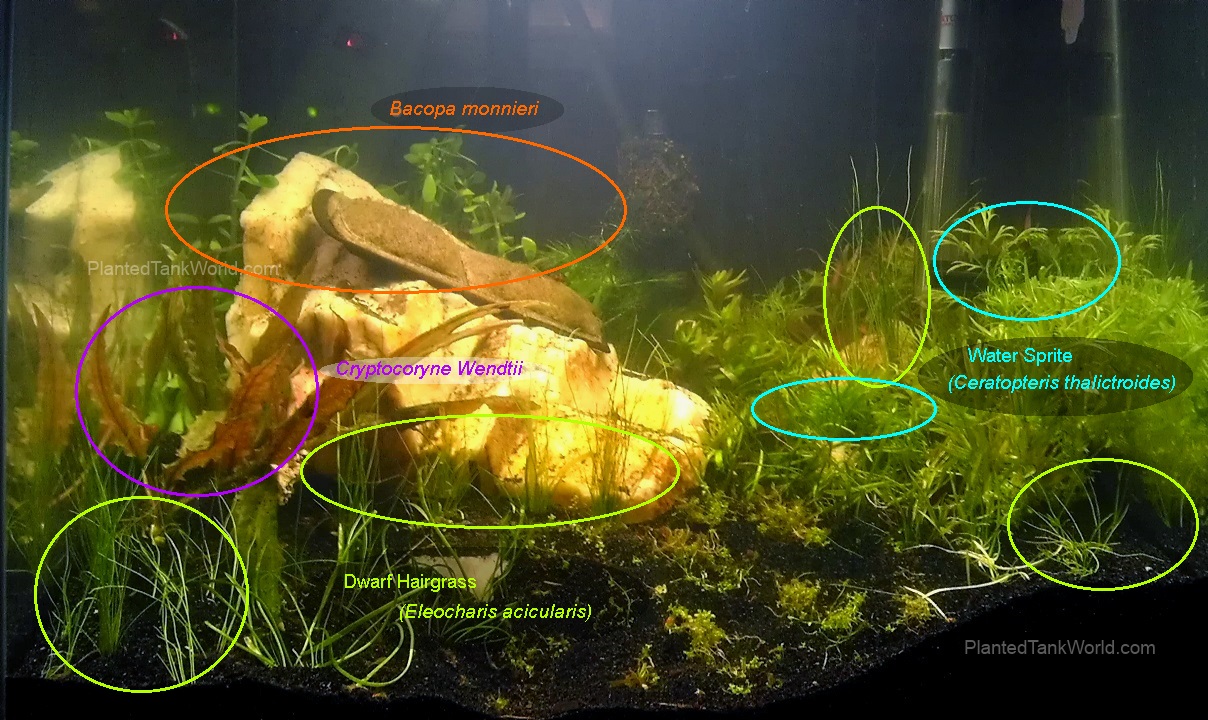
  6. Planting: I used mostly scraps from other tanks for this one. Initially I planted dwarf hairgrass, microsword, and others – see the diagram below. Plant everything deep enough to keep it anchored. I recommend using fine tweezers to reduce substrate movement during planting.
  7. Fix-up Sand Layer: Planting a Walstad bring soil up to the surface, so add additional sand where needed to cover soil and fill any tweezer holes.
  8. Water: Fill the tank slowly and, again, pouring onto a barrier to protect the substrate. Use water from an established, healthy tank if you can.
  9. Gear/Cycling: Turn on the heater and filter. I always seed my filters with media from established tanks. In addition to the HOB with cycled filter pads, I also placed a filter insert on one of the rocks below the filter outflor. It was too big to fit in the HOB and looked rather gross, but it definitely helped the tank cycle almost instantly.

Here are all of the names of the plants I used, labeled in the images below.
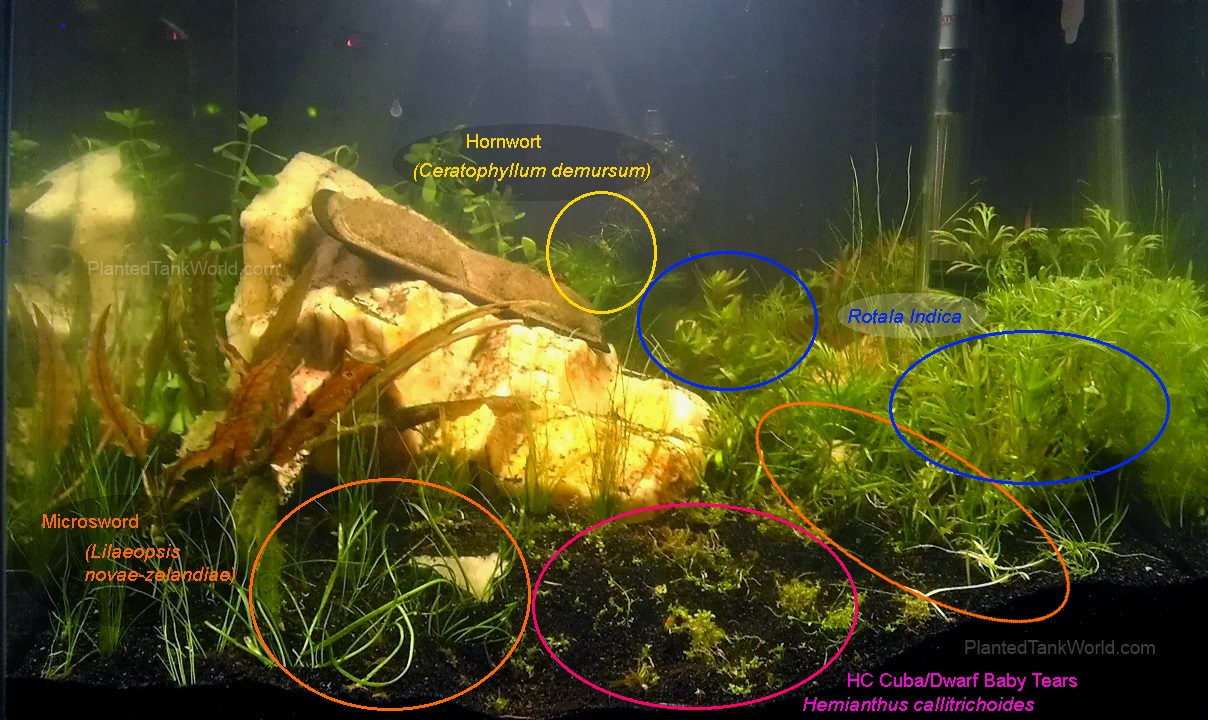
11.3 Day 1 Plant Labels

11.3 Day 1 Plant Labels 2

Hornwort/Coontail (Ceratophyllum demursum)

Cryptocoryne wendtii

Water Sprite/Indian Fern (Ceratopteris thalictroides)

Bacopa monnieri

Dwarf Hairgrass (Eleocharis acicularis)

Rotala indica

Microsword/Copragrass (Lilaeopsis novae-zelandiae)

HC Cuba/Dwarf Baby Tears (Hemianthus callitrichoides)

NYC Trip – Manhattan Aquariums

On a recent trip to New York City, I decided to see what aquatics stores might have to offer. Overall, I was fairly disappointed in the the selection of stores I could find. One of them was a disturbingly barren and algae ridden. Most aquarium stores that were listed online were no longer in business at the address given online. Most of my day was spent wandering around, becoming increasingly frustrated by abandoned or missing storefronts of businesses that still had working answering machines and websites.

There were two beautiful gems amid the chaos. One of these was Manhattan Aquariums. They are a aquarium store with a strong focus on marine fish and corals, but they also had some beautiful freshwater tanks. By this point, my battery was dying, so I didn’t wind up even taking any pictures of the freshwater tanks! The store was very clean, had a huge selection, and had some absolutely amazing display tanks. Here are some pictures of this store:

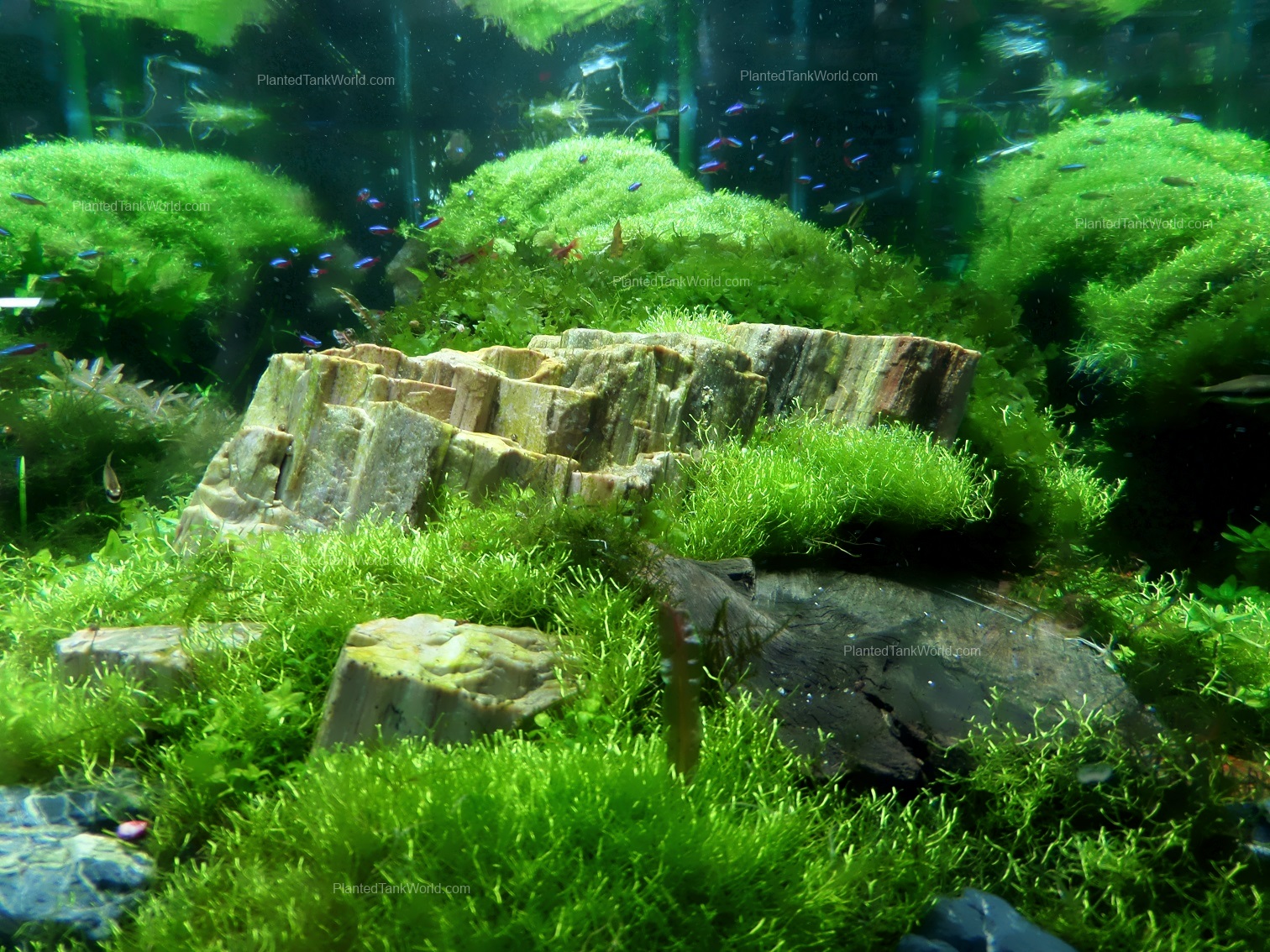
The second store I visited was Pacific Aquarium Inc. They had a ton of freshwater and marine fish, lots of plants, and ample supplies of every sort for planted tanks. Beautiful petrified wood pieces, a variety of substrates, planting tools, … I spent a lot of time here looking at everything. It was a lot of fun to see all of the potential supplies, fish, plants, and aquascapes available today!

Here are some pics of their amazing freshwater aquascapes

Petrified Wood Aquascape with Riccia Carpets

Petrified Wood Aquascape with Riccia Carpets

And here are some of the back store, where the majority of the fish (fresh, marine, etc) were housed. Everything was clean, the fish all looked quite healthy, and the plant tanks didn’t seem to have a single snail. Beautiful store!

I’m hoping to have my next short trip be to a city where I might get to see some great tanks. So, if you have a recommendation of a beautiful aquarium store to visit, let me know!

Fish On My “To-Do” List

The more I got into freshwater fish and plants, the more species I learned of that would make really interesting and beautiful tank inhabitants. Here are some of the fish I haven’t yet had the opportunity to care for, along with some of their basic requirements. In no particular order:

Furcata Rainbow

aka Forktail Blue Eye Rainbow, (Pseudomugil furcatus )

Two male furcata rainbows

Two male furcata rainbows

 reach around 2″

prefer tanks densely planted with shady areas

pH 6.0 to 8.0, temp 75 to 81 degrees Fahrenheit

best kept in large groups

peaceful

Spotted Blue-Eye Rainbow

aka Gertrude’s Blue-Eye, (Pseudomugil gertrudae )

Gertrude’s Blue-Eye Rainbow, male

reach about 1.5″

like densely planted tanks with driftwood, floating plants to break up light

wide pH range, prefer around 6.0 to 7.0

temperature between 73 and 86 degree Fahrenheit

best kept in groups

Peacock Gudgeon

aka Peacock Goby, (Tateurndina ocellicauda )

Male Peacock Gudgeon

reach about 2.5″

15+ gallon tank

temperature 72 to 77 degrees Fahrenheit

pH of 6.5 to 7.8

prefer tanks with lots of cover

peaceful

Boesmani Rainbow

aka Boeseman’s Rainbowfish, (Melanotaenia boesemani )

Boesmani Rainbows

reach about 3″

30+ gallon tank

temperature of 72 to 77 degrees Fahrenheit

pH 6.5 to 8.0

prefer planted tanks with lots of swimming room

like being in groups

peaceful

Rainbow Darter

(Etheostoma caeruleum )

Rainbow Darter

reach about 2.5″

very sensitive to water conditions

North-American native fish!

prefer rocky substrates and water with a decent current

temperature 60 to 75 degrees Fahrenheit

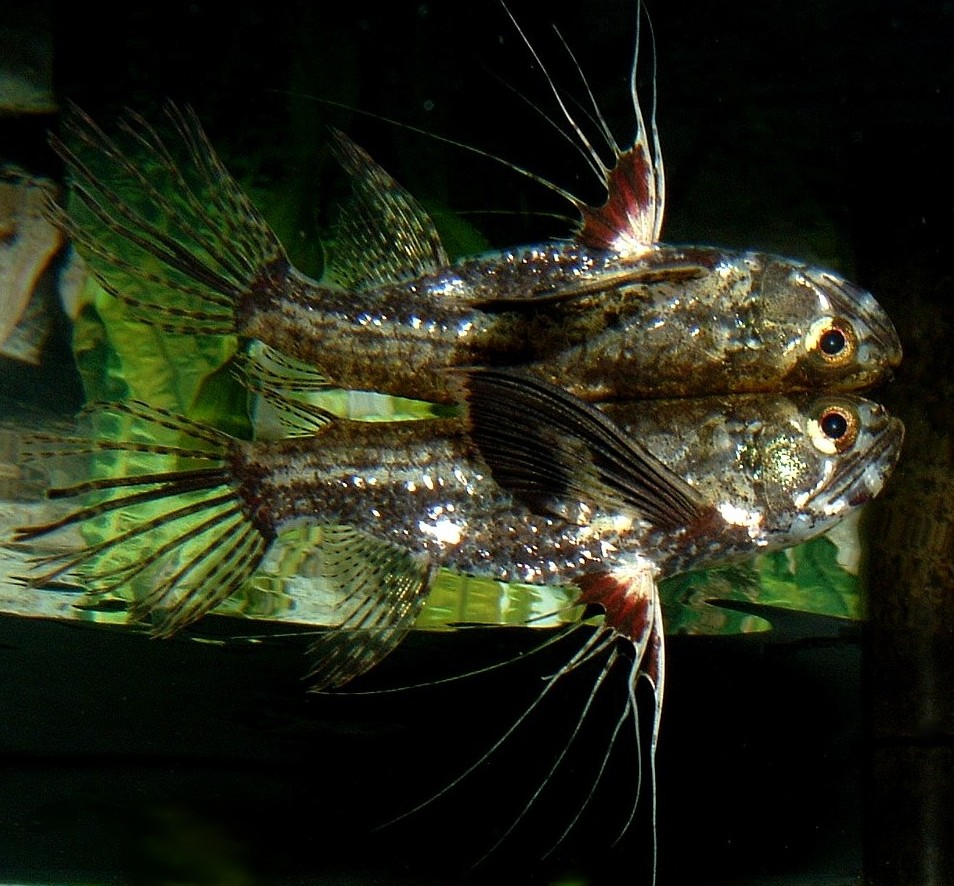
African Butterflyfish

(Pantodon buchholzi )

African Butterfly Fish

reach around 4″

need 30″ gallons

75 to 86 degrees Fahrenheit

pH close to 7.0

floats just below water’s surface

aggressive