7.13 Gallon – Initial Setup

I finally got around to starting my the final tank from my Aquatop rimless tank splurge from a while back. Using riverscapes as my inspiration, I wanted to create a quite stream dividing a forest from a field. Here was my process for the initial setup of this tank:

1. Collect Supplies

I took a trip to a local landscaping supply company to find some nice looking rocks for the stream bed. Using two sizes of gravel, with smaller pieces in the back and larger pieces in the front, can make a tank look much deeper than it really is. I wish I had gone with substrate that matched the rock color, or perhaps I’ll try covering the entire tank with fine grained substrate matching the steam’s rocks in the future.

Except for plants, all the remaining supplies (heater, filter, lights, substrate, driftwood, moss) were already accounted for. I found some 50% off plants at my local Petsmart that looked salvageable – crypts and small swords seemed like a good start.

2. First Layer – Soil

First Layer (Soil) - I added too much water for this step. Ideal consistency is thick mud.

Soil Base – Ideal consistency is thick mud. I added too much water here.

I used Miracle-Gro Organic Choice Potting Mix for this layer. I added too much water, creating more of a soup than the intended thick mud. Picking out the larger pieces of wood is fairly easy at this point and highly recommended.

3. Soil cap

Second Layer - Soil Cap

Second Layer – Soil Cap

This layer keeps the soil in place and gives waste a route to the bacteria in the soil. Medium grain works well, if not larger. Size depends on the intended top layer of the substrate – the larger particle grains will tend to rise to the top if disturbed.


3. Basic landscaping

3 angling substrateThis step would have been much easier if I hadn’t overdone the water in the first step. If the soil is properly moistened trenches or other depressions in the landscape will not flood with muddy water. I dug a trench for the the stream rocks and angled the substrate up toward the back, dipping in to meet the stream.

4. Hardscape
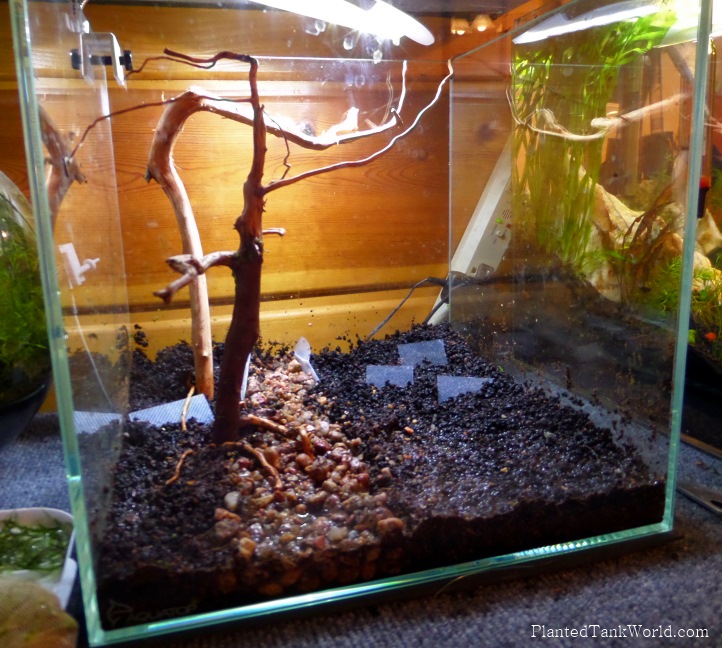
Step Four - Add in hardscape (large rocks, wood, etc) and substrate support

Step Four – Add in hardscape (large rocks, wood, etc) and substrate support

I added the stream rocks first, with larger pieces in the front and smaller ones in the back. Then I positioned the two “trees” next to the stream, using spare pieces of the wood for root structures. To help keep the substrate height taller toward the back of the tank, I added thin pieces of hard plastic. Pieces of reusable plastic containers, plastic milk cartons, or such work well for this, so long as they are clean and will not degrade or leach chemicals into the tank. These pieces should be added so they tilt with the incline, while still remaining close to vertical. Angling too much makes planting and holding soil back difficult. Plain vertical pieces tend to be visible in the tank rather than staying buried under the top layer of substrate.


5. Final Substrate Layer

5 all substrate down

Step Five – Final substrate layer and landscaping adjustments

Adding this last layer of substrate was made much harder by using too much for from the first step. It should be evenly spread over the previous layer, with some deviations to correct the intended landscape. This layer also tucks in the hardscape.


6. Planting

I planted much more heavily along the left side of the tank, which will hopefully grow into a thick forest of leaves and tall greens. I put the swords in the far back and crypts in front of them along the entire back. I might move the plants on the right if I can’t maintain them as short as I’d like. The right side has three netted mats. The two larger have riccia fluitans, and the other has moss. This should grow up through the netting, creating a carpet. I’ll be posting on how I made these mats soon!


7. Filling – SLOWLY

I used a weak pump to add the first few inches of water slowly. Whenever I’ve tried to pour water, even using baffles or such, I always wind up stirring up far more dirt than intended. The pump is older, sufficing only for this and drip acclimation for the most part. Once the first few inches were added (still super clear!), I switched to a basic siphon system. Since the tank is up on a stand, I had to stack the water bucket high enough to be above the tank, as seen in some of the photos above. In both bases, I had the water entering the tank on top of the stream gravel to avoid stirring up substrate. Unfortunately, I did have an accident while switching between systems, causing a plume of dust to enter the water column.

8. Equipment, Waiting, and Water Changes

Once the tank is full, the equipment can be added and turned on to begin filtering and maintaining the tank temperature. At this point, there’s not much more to do than wait for the dust to settle and perform a few water changes. I usually do daily water changes until the tank is clear, and I use pre-seeded filter media to avoid waiting the usual month or so for the tank to cycle.

I’ll post an update once the tank is clear and the plants have begun to acclimate. I hope it turns out well!

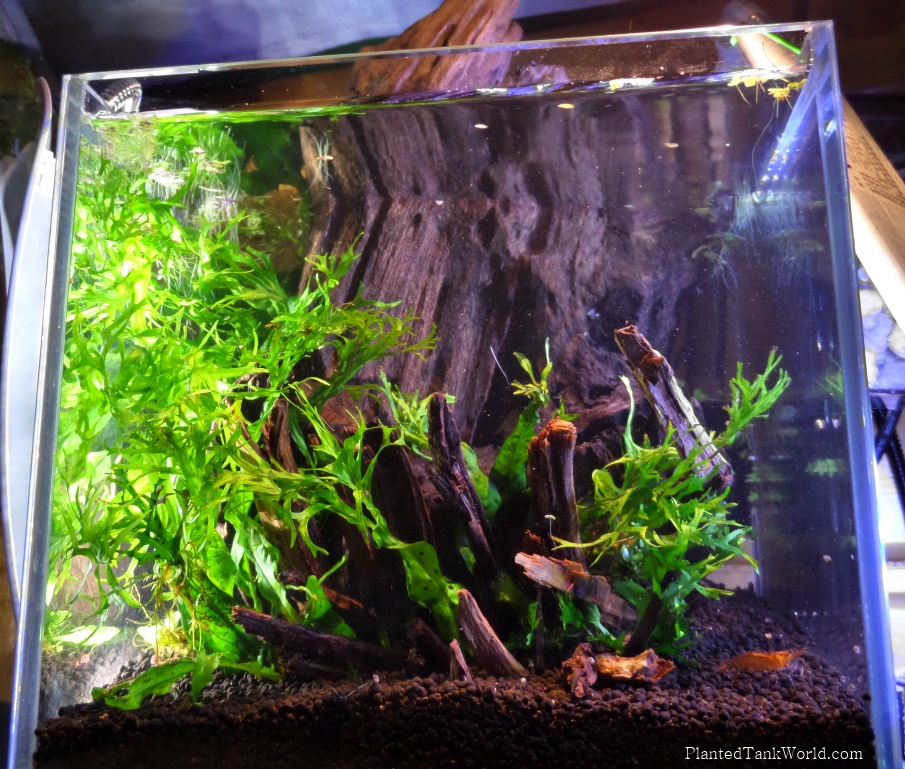
2.11 Gallon “Lace and Wood” Update

9

This little tank, the smallest I currently have running, is doing surprisingly well! I’d been scared about the upkeep such a small tank might require to maintain its stability, but it has been on of the easier tanks in my current collection. Water changes are fast since I usually change out under a gallon at a time. The lace leaf java ferns are very low maintenance plants, and the shrimp have been keeping everything clean. My one battle with this tank is currently being waged against the snail population. At first, pond snails were a huge benefit to keeping the tank clean and balanced. Now, they mostly obstruct my view!

7

This is the first time that I actually prepared the tank ahead of time for a photo shoot. I made sure to complete a water change and glass cleaning the day before taking photos. I also pumped as much light into the tank as I could without letting light bleed out into the room. This way, glare and reflections off the front surface were greatly reduced.

19

I am still having trouble finding a lighting setup that will illuminate both the tank and protruding piece of wood equally, but, for now, I’m quite happy with how well these photos came out. Some of the later shots really show off the wood breaking the surface of the water.

4

I also removed the floating plants about halfway through the shoot. After, when looking through all the photos, the floater-free shots all seemed to come out much better! I added them back in after the shoot, since their sudden removal could possibly cause a sudden swing in tank conditions, but I’ll be trying to slowly phase them out in the future.

11

I’m quite happy with this tank for now. I’ll update on how it progresses as the javas grow and hopefully Orange Sunkist Caridina shrimp begin to breed!

10

Blue berry Shrimp (neocaridina palmata) and Finding a Source of Tank Contamination

Blueberry Close-Up Details

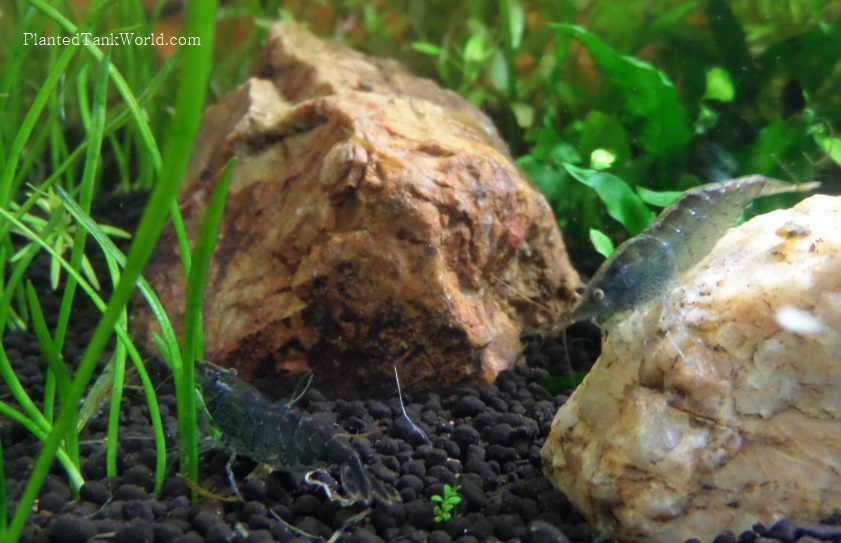
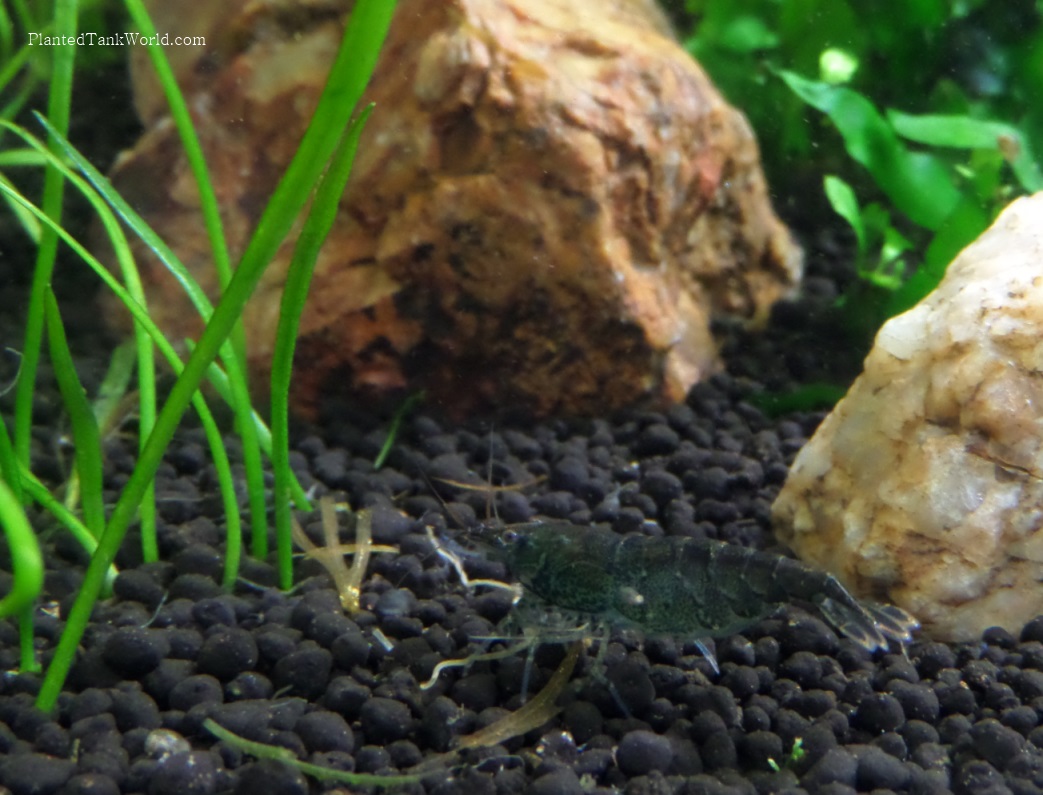
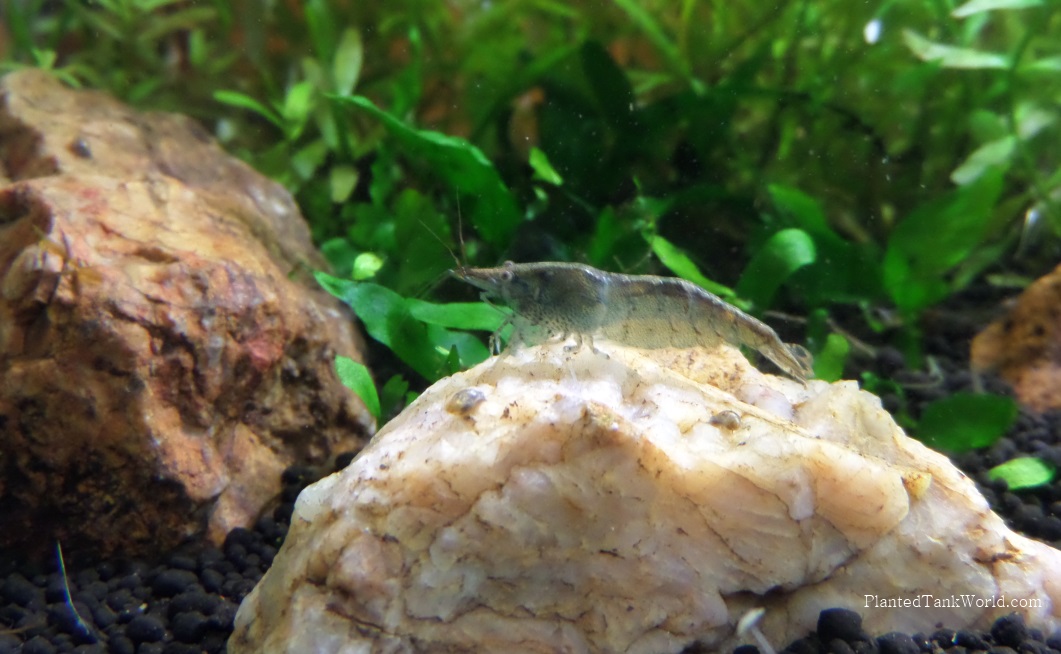
The other shrimp from my most recent Bob’s Tropical Plants order was five blue berry shrimp, neocaridina palmata. I chose these on a whim in part due to low price compared with other varieties, and also to have shrimp that would let the plants remain the focal point by blending in more easily than some of the brighter color variations available.

Blueberry Shrimp 1

I had noted in a few earlier blog posts that I was having trouble keeping these blueberries healthy. Despite being in a larger tank with more plants and a higher flow filter than the Orange Sunkist shrimp tank, my blueberries were dying while my orange were thriving. I began performing daily small water changes and vacuum sessions, after which the blueberry shrimp would always perk up. Yet by that night or next day, they were often back to being sluggish. The plants were also struggling to grow as quickly as others of their species in similar tank setups. I documented some of the efforts I took to increase water flow and filtration in this tank in a previous post.

Blueberry 2

While the tank did experience a burst of new growth from the increase water flow and continued water changes, every morning I would wake to find my shrimp still being sluggish. Healthy shrimp are constantly filtering the water, with their limbs a blur of movement. These blueberries would be still, often staying in one location for long periods of time. Even when grazing, their movements were slow and labored. After a morning mini water change, normal behavior would resume. There must have been something else in the tank affecting my blueberry shrimp negatively.

Blueberry 3

Just to really confirm my new theory, that something in the tank was leeching harmful substances into the water – I decided to add in a currently healthy and thriving shrimp from a nearby tank. My newish red cherry shrimp colony was doing great, so I snagged an active, healthy looking red cherry to be moved to the blueberry shrimp tank. If a newly added, healthy shrimp began exhibiting the same symptoms as the unhealthy shrimp, then the tank environment itself is most likely the cause of those symptoms. At this point, I was much less worried about cross breeding than I was about my blueberry shrimp, so acclimated and introduced the shrimp test subject.

1b

Soon the red cherry shrimp also began acting sluggish and unhealthy, just like the blueberries. Since water quality according to standard tests (ammonia, nitrites, nitrates, phosphates, pH, temperature, etc) all came up normal, the tank water must be getting contaminated from something abnormal within the tank itself. So I sat down I began searching for signs of possible contamination in the tank. The plants were common to many of my tanks and were doing well in other locations. The substrate was from the same batch I used in my thriving 2.11 gallon lace java fern tank – even from the same rinsing, so was not the cause. The filter had been seeded in another tank, which showed no signs of distress when it was in place. The filter media came from a different successful tank too, so the filter and its contents were probably not the cause. Suddenly my eye caught something I had not noticed before – small bright yellow patches on one of the rocks in the foreground.

Notice yellowish coloring on the rock in the far background, near the reddish shrimp.

Notice yellowish coloring on the rock in the far background, near the reddish shrimp. This coloration hadn’t been present when I first placed these rocks in the tank!

I removed the rock this morning, and hopefully there will be a change in their behavior. Though I had soaked the rock in water for about a month before adding it to this tank, it seems to have some sections that react within my tank. The remaining rocks show no coloration, but I might consider removing them as well if the shrimp still aren’t active. Since these rocks are the only element of this tank unique to this setup, if something is leeching chemicals, it is most likely them. Hopefully this works!!

Blueberry Shrimp 6