

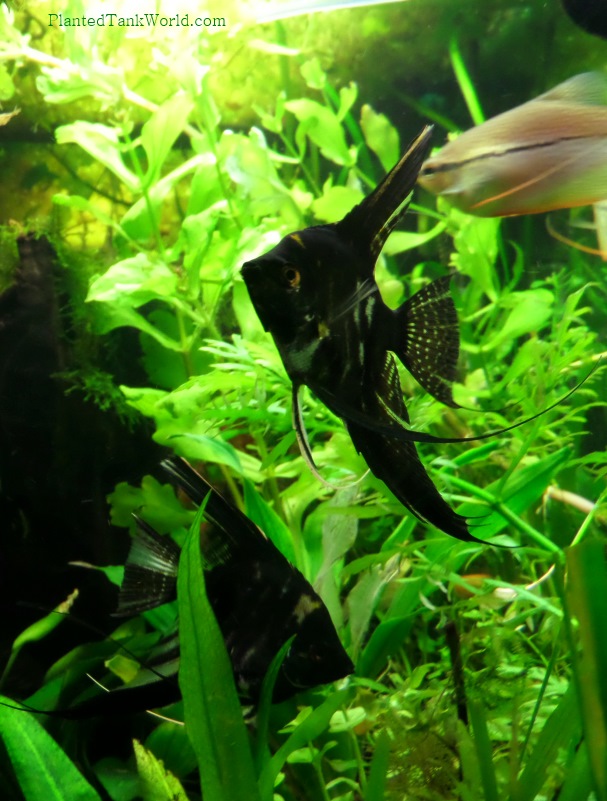
Two of my P. scalare
Freshwater angelfish are beautiful, intriguing creatures. I wish I had enough room left to devote a species-only tank to these fish. There are three different commonly accepted species of freshwater angelfish (Pterophyllum): P. scalare, P. altum,and P.leopoldi.All form monogamous mating pairs, and all originate in river basins in South America.

It is the species Pteriphyllum scalare that is usually referred to as the freshwater angelfish or just angelfish. These are the most common in the aquarium trade. They can handle a range of pH from about 6.0 to 8.0, hardness of 5 to 13 dH, and temperature of 75 to 86 degrees Fahrenheit. Angelfish are quite thinly compressed (as seen in the above photo) with long dorsal (back) and anal (bottom rear) fins.

Wild type angelfish are a silver color with vertical stripes, providing them cover, similar to my angelfish seen above. Many different colors of angelfish appear in the aquarium trade, but it turns out that any strong deviation from the wild-type coloration is usually due to inbreeding. Thus, many angelfish in the trade which have been bred for coloration are actually quite fragile and difficult to breed, as their genetics have already been compromised. If you ever see a “wild caught breeding pair” for sale, there is a good reason why their price will be steep.
Angelfish are actually of the family Cichlidae, making them cichlids (pronounce sick-lids). Unlike most cichlids, angelfish can live peacefully with non-cichlids, so long as the other fish are large enough to avoid being eaten. For instance, most angelfish would see a beautiful school of juvenile cardinal tetras as a feasting opportunity. It is also important to note that angelfish should not be kept with typical cichlids! Compared to most cichlids, angelfish are docile/timid and would not survive.


Angelfish also need special consideration when choosing a tank. Their body shape, being so elongated in the vertical direction, is complimented well by a tall choice of tank. Furthermore, during breeding time, angelfish can become very aggressive and territorial. Stocking your tank with angelfish needs to be done carefully, else territory disputes can arise. The first group of angels I tried to home wound up killing each other in a horrible murder-murder-murder pact. The males exhausted the female to death then fought each other to the death. All three were fine for two weeks or so before the ordeal took place.
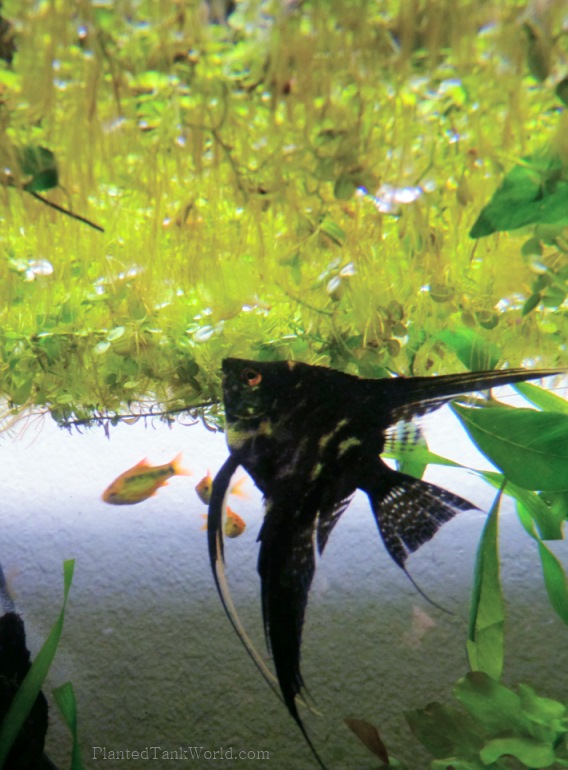
Due to these behavioral quirks, angelfish tend to do best with, well, other angelfish. Colonies with five or more spread out the aggression well, but require a good deal of space. They can be kept singly, as a breeding pair quite easily as well. The long flowing fins make most fin-nippers, like some tetras and tiger barbs, poor tank mates. Fast and nervous fish can also stress angels. In addition, Angelfish have rather aggressive feeding habits, often crowding out timid or slow eating fish.
One note for those with planted tanks: my angels enjoy ripping apart moss in search of food. They plow through stem plants like it is their job. I was quite surprised to find that it was my angels who caused many of my planted-tank woes. I also had a thriving dwarf shrimp colony in the tank before adding the angels… They’re beautiful fish, but I think I’d want a more specialized tank for them in the future.

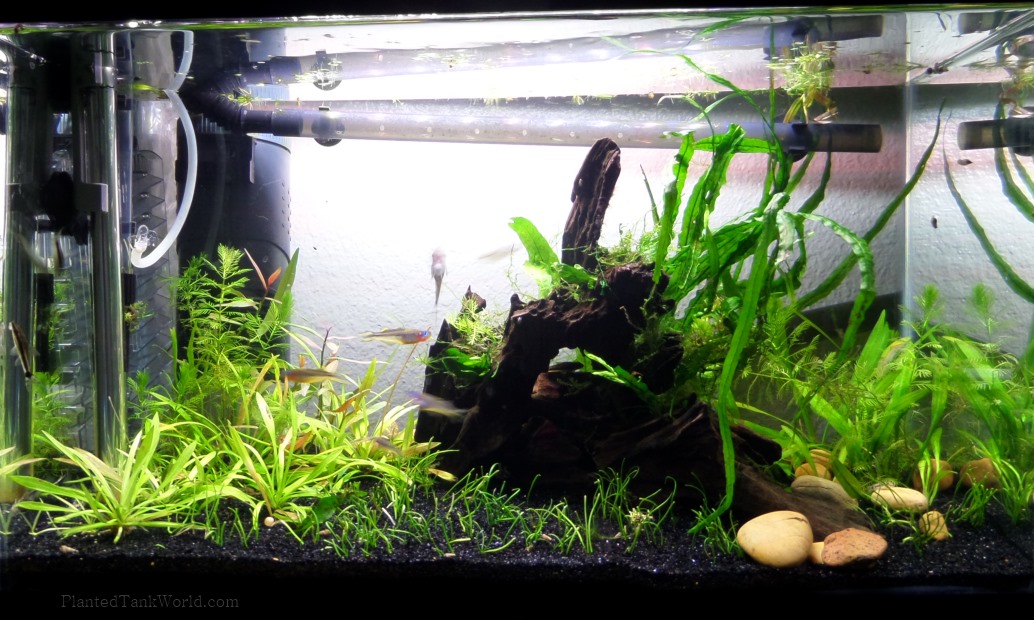
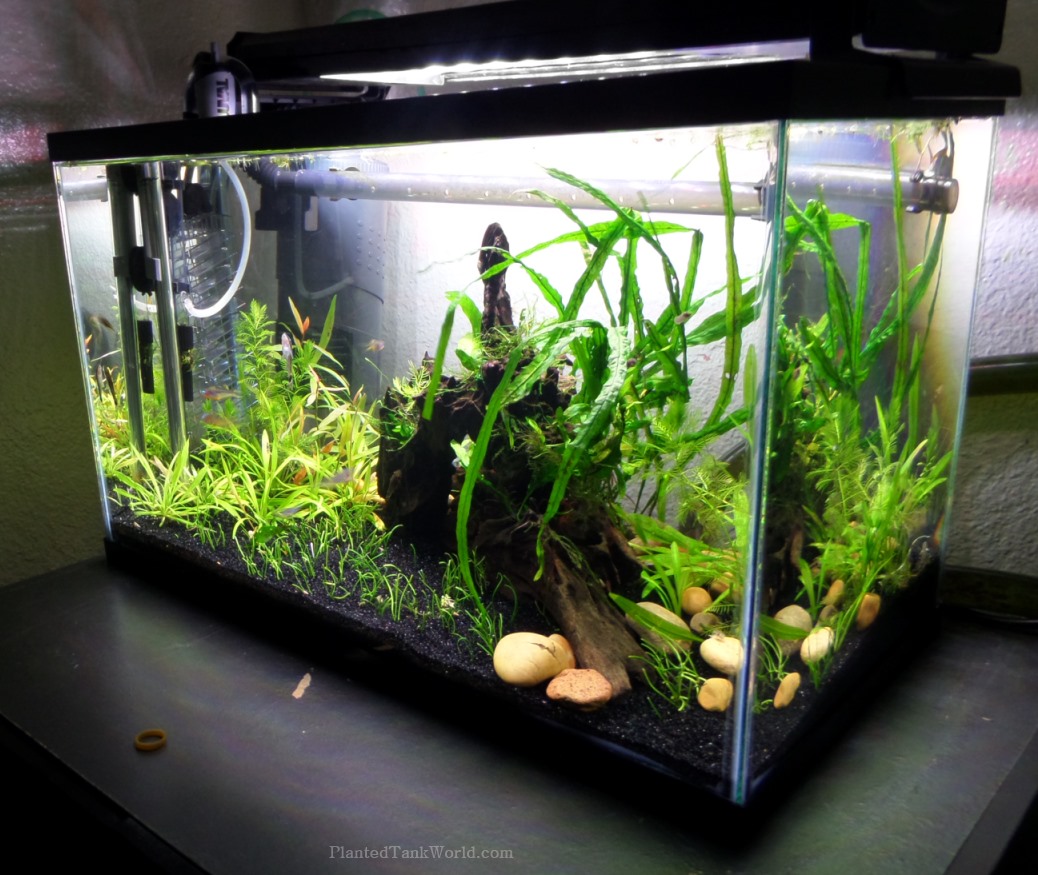




 My World of Planted Freshwater Aquariums