Rainbow Shark (Epalzeorhynchos frenatum)

8

I added a rainbow shark to my 150 gallon tank a few months ago, and I have really fallen in love with the bright flashes or color she adds to the tank.

3

Watching her munch on every leaf and wood surface around is also rather adorable. I’d never really seem a creature forage the way that the rainbow shark does, making her a favorite member of my 150 to watch. They make great aquarium cleaner fish of sorts – finding uneaten food bits in every nook and cranny of the tank.

1

Though called a shark by name, Rainbow Sharks are not true sharks. They fall under the category of ray-finned fish instead. These guys can grow up to 9 or so inches, but usually fall short around 7 inches or so in most aquarium environments.

5

Males are sleaker than females and have black lines along their tailfins, unlike females. Given this, I think that I have a female.

2

Rainbow shark can be difficult to care for given their possibilities for aggression and need for larger tank sizes. 55 gallons or more is highly recommended for a single Rainbow shark,with typical community pH around 7.0 and a temperature of 72 to 79 degrees Fahrenheit.

6

Mine loves to swim the entire length of my six foot 150 gallon tank, and she sure is fast! She is one of the more aggressive fish in the tank, occasionally chasing my gold barbs or other fish in a sudden burst of speed. Keeping multiple rainbow shark in the same tank is generally a bad idea unless their environment has been carefully planned and researched.

4

Breeding rainbow shark hasn’t been well documented or recorded in the aquarium setting, but I’m still tempted to try adding a second rainbow shark in the future if I lower the stocking of my 150. It would be a nice experiment, and I’d love to watch two of these fast, brightly colored fish zip around my tank. If you’ve ever tried having more than one of these in your tank, let me know how it went!

7

Green Spotted Puffers (Tetraodon nigroviridis) and The Manzanita Branch Failure

I have recently taken a greater interest in making my Green Spotted Puffer (GSP) tank more suitable for Jake and Finn. Previously I had introduced a large, branching piece of manzanita wood into their tank. This was a huge mistake which I am still recovering from. The earlier batch of photos I posted of Jake and Finn were certainly not of the at their best. The manzanita I ordered was not sandblasted. I loved the deep red color of the bark, but had not realized how terrible of a mistake it was to introduce this piece of wood to their tank.

The branch has developed thick layers of growth between cleanings.

The branch has developed thick layers of white, slimy growth between cleanings.

Perhaps someone else could let me know their process for preparing manzanita wood for use in aquariums, but so far every process I have tried has still resulted in a long mold/fungus period, even after debarking, boiling, and soaking. The whitish slimy coat on the branch was especially hard to battle in a GSP tank – they eat every snail or shrimp that might combat the decaying wood and white slime. Furthermore, GSPs are quite messy eater, leaving chunks of food and parts of decaying snails littered throughout the tank and giving algae and other organisms an ample food supply.

Jake and Finn, before the slime began to affect them.

Jake and Finn, before the slime began to affect them.

The longer I left the wood in the tank, the worse Jake and Finn looked. Every source I’d found online suggest that, given about two months, the problem would subside on its own. Yet I wasn’t sure I wanted to subject Jake and Finn to such a long period of stress and possibly dangerous water conditions. At first I resisted, adding a bag of Purigen and an extra sponge filter. Jake and Finn still had bellies that would turn gray near the edges and sometimes in the middle, despite frequent water changes and white slime removal. Once Jake’s neon head spot began to fade, I decided it was time for the experiment to end.

This slideshow requires JavaScript.


I took out the manzanita branch and did a large water change, being sure to vacuum up any remaining white slime in addition to the usual removal of the brownish destritus and algae combination that my GSP’s messy lifestyle always seems to create. Within a day, Jake and Finn were already noticeably more active and had better coloration. They came out to greet me enthusiastically and returned to exploring the tank instead of just sleeping all day. Maybe in the future, I can prepare a beautiful manzanita branch for them that won’t cause these issues, but, until then I’ll be plotting their new aquascape!

Jake 2

Jake

Blue berry Shrimp (neocaridina palmata) and Finding a Source of Tank Contamination

Blueberry Close-Up Details

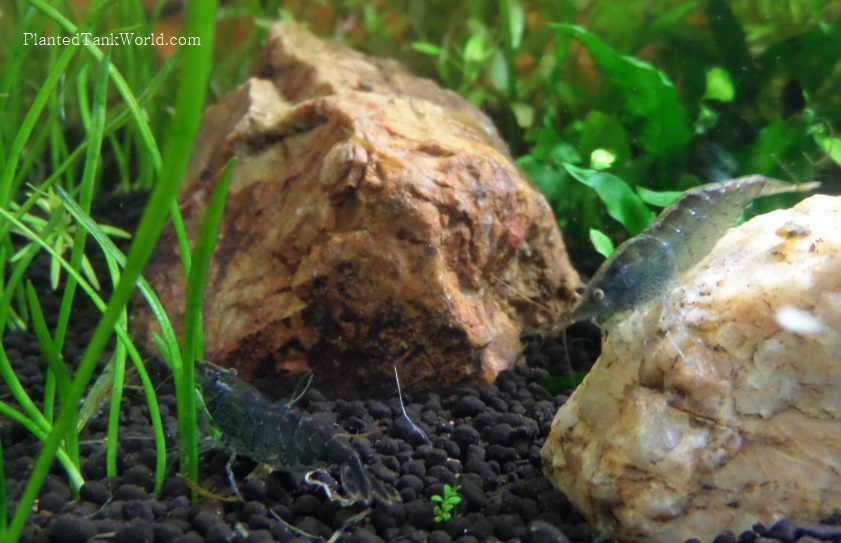
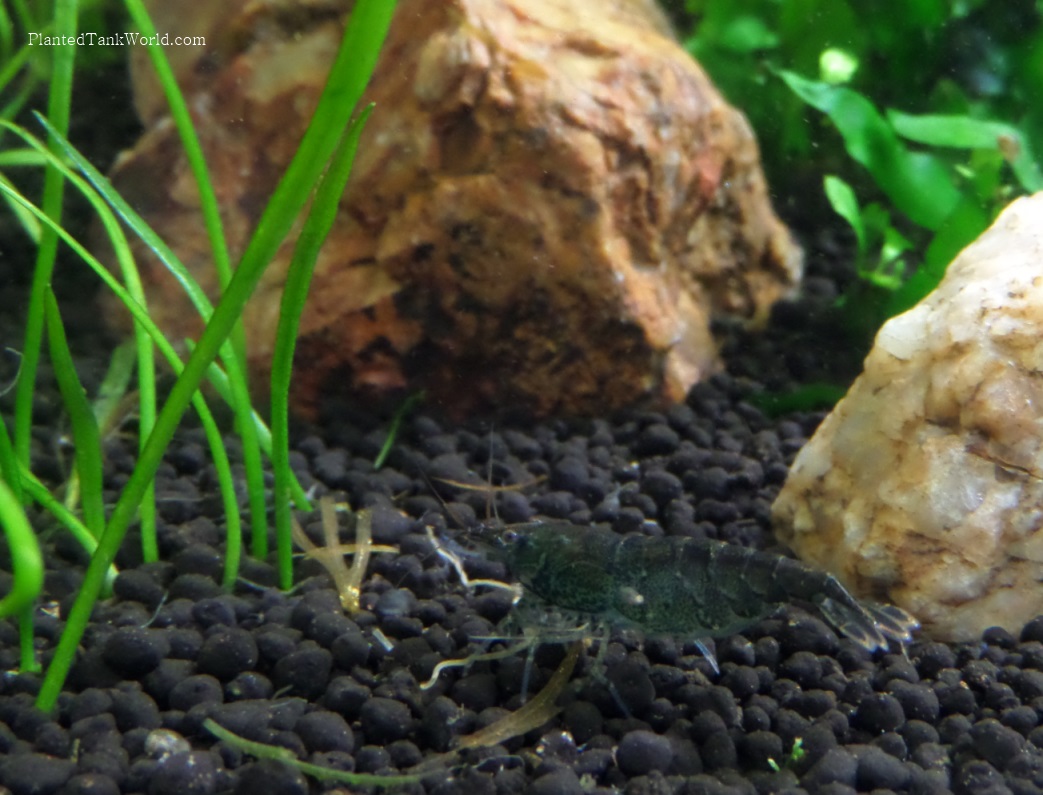
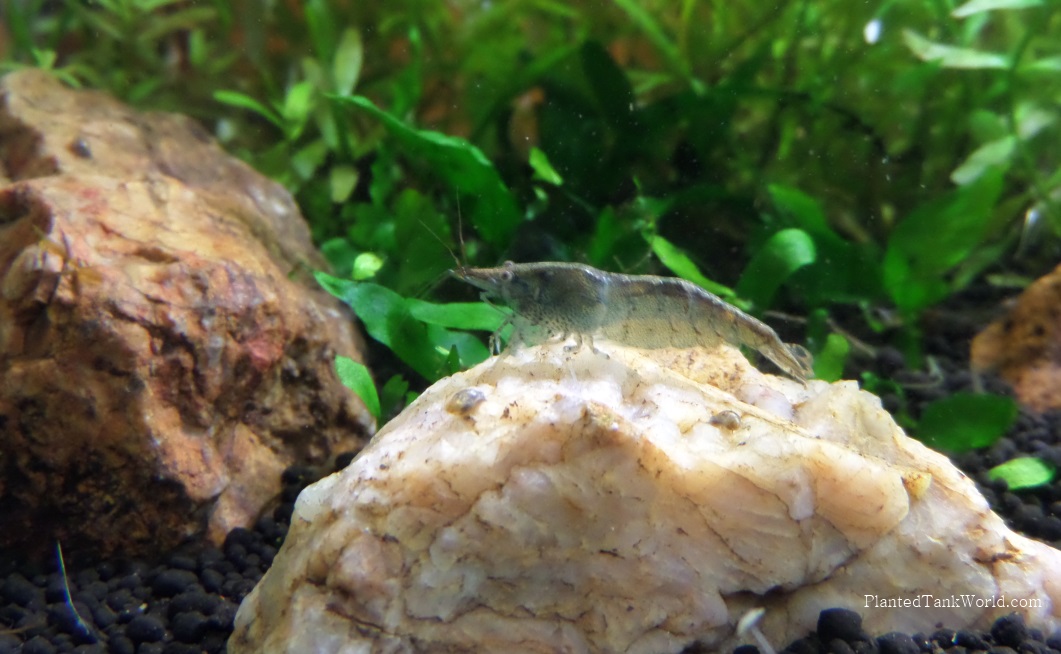
The other shrimp from my most recent Bob’s Tropical Plants order was five blue berry shrimp, neocaridina palmata. I chose these on a whim in part due to low price compared with other varieties, and also to have shrimp that would let the plants remain the focal point by blending in more easily than some of the brighter color variations available.
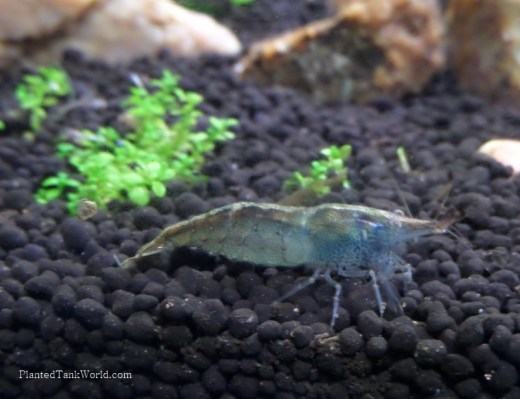
Blueberry Shrimp 1

I had noted in a few earlier blog posts that I was having trouble keeping these blueberries healthy. Despite being in a larger tank with more plants and a higher flow filter than the Orange Sunkist shrimp tank, my blueberries were dying while my orange were thriving. I began performing daily small water changes and vacuum sessions, after which the blueberry shrimp would always perk up. Yet by that night or next day, they were often back to being sluggish. The plants were also struggling to grow as quickly as others of their species in similar tank setups. I documented some of the efforts I took to increase water flow and filtration in this tank in a previous post.

Blueberry 2

While the tank did experience a burst of new growth from the increase water flow and continued water changes, every morning I would wake to find my shrimp still being sluggish. Healthy shrimp are constantly filtering the water, with their limbs a blur of movement. These blueberries would be still, often staying in one location for long periods of time. Even when grazing, their movements were slow and labored. After a morning mini water change, normal behavior would resume. There must have been something else in the tank affecting my blueberry shrimp negatively.

Blueberry 3

Just to really confirm my new theory, that something in the tank was leeching harmful substances into the water – I decided to add in a currently healthy and thriving shrimp from a nearby tank. My newish red cherry shrimp colony was doing great, so I snagged an active, healthy looking red cherry to be moved to the blueberry shrimp tank. If a newly added, healthy shrimp began exhibiting the same symptoms as the unhealthy shrimp, then the tank environment itself is most likely the cause of those symptoms. At this point, I was much less worried about cross breeding than I was about my blueberry shrimp, so acclimated and introduced the shrimp test subject.
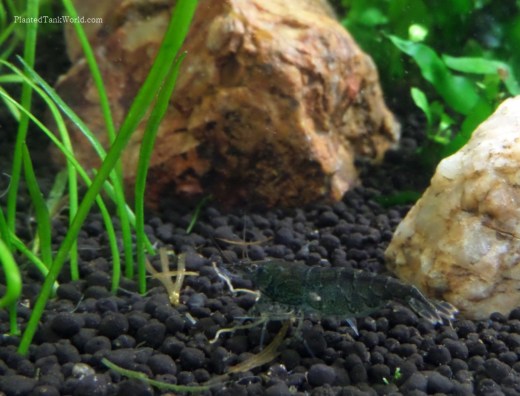
1b

Soon the red cherry shrimp also began acting sluggish and unhealthy, just like the blueberries. Since water quality according to standard tests (ammonia, nitrites, nitrates, phosphates, pH, temperature, etc) all came up normal, the tank water must be getting contaminated from something abnormal within the tank itself. So I sat down I began searching for signs of possible contamination in the tank. The plants were common to many of my tanks and were doing well in other locations. The substrate was from the same batch I used in my thriving 2.11 gallon lace java fern tank – even from the same rinsing, so was not the cause. The filter had been seeded in another tank, which showed no signs of distress when it was in place. The filter media came from a different successful tank too, so the filter and its contents were probably not the cause. Suddenly my eye caught something I had not noticed before – small bright yellow patches on one of the rocks in the foreground.

Notice yellowish coloring on the rock in the far background, near the reddish shrimp.

Notice yellowish coloring on the rock in the far background, near the reddish shrimp. This coloration hadn’t been present when I first placed these rocks in the tank!

I removed the rock this morning, and hopefully there will be a change in their behavior. Though I had soaked the rock in water for about a month before adding it to this tank, it seems to have some sections that react within my tank. The remaining rocks show no coloration, but I might consider removing them as well if the shrimp still aren’t active. Since these rocks are the only element of this tank unique to this setup, if something is leeching chemicals, it is most likely them. Hopefully this works!!

Blueberry Shrimp 6